Apple pests and problems
A maggot, some spots, a woolly bit and a tree that only fruits every other year. Here’s what’s what, from the RHS.
Codling moth
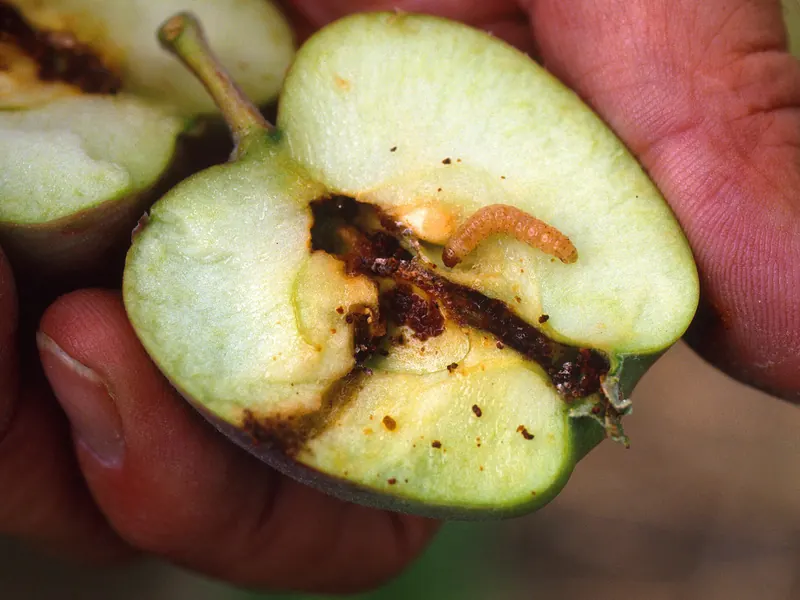
The caterpillar of the codling moth, Cydia pomonella, is the classic “maggot” in a maggoty apple. RHS: Codling moth
Inside a codling-damaged apple you’ll find a tunnel to the core and the caterpillar’s droppings (frass). Damaged fruit tends to ripen and drop early. RHS: Codling moth
Codling moths come out in late May and June and lay eggs on or near the young fruit until mid-July. Each caterpillar feeds in the core for about four weeks. RHS: Codling moth
Pheromone traps, put up in May, catch male codling moths. On their own they rarely control the moth, but they show when it’s about. RHS: Codling moth
Apple scab
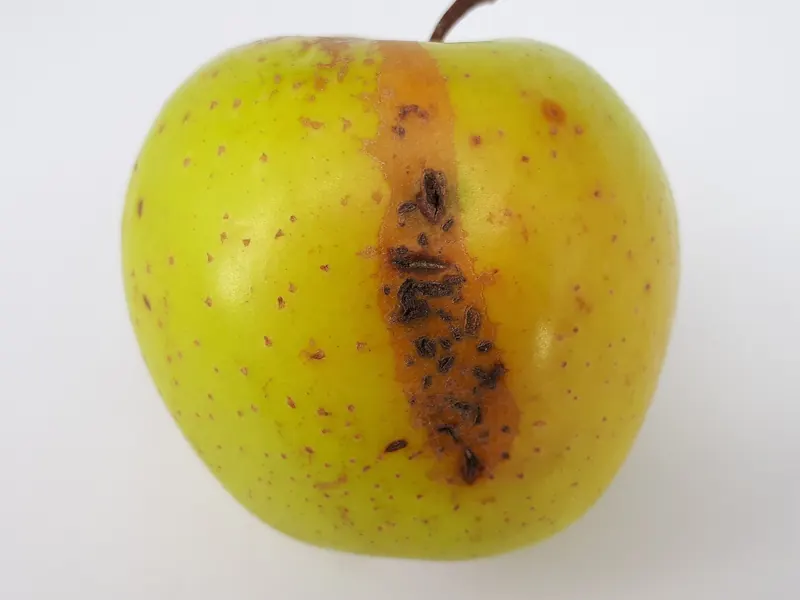
Apple scab is a fungus, Venturia inaequalis. It makes olive-green blotches on leaves and dark, scabby patches on the fruit. RHS: Apple and pear scab
A light attack of scab only marks the skin, and the apples eat just as well. RHS: Apple and pear scab
Scab survives the winter on fallen leaves, so clearing them up helps. RHS: Apple and pear scab
Scab-resistant apples include ‘Discovery’, ‘Charles Ross’, ‘Ellison’s Orange’, ‘Lane’s Prince Albert’ and ‘Emneth Early’. RHS: Apple and pear scab
Apple canker
Apple canker, caused by the fungus Neonectria ditissima, makes sunken patches of dead bark on branches. It’s worse on wet, heavy soils. RHS: Apple canker Apples prone to canker include ‘Cox’s Orange Pippin’, ‘James Grieve’ and ‘Spartan’. RHS: Apple canker
Woolly aphid
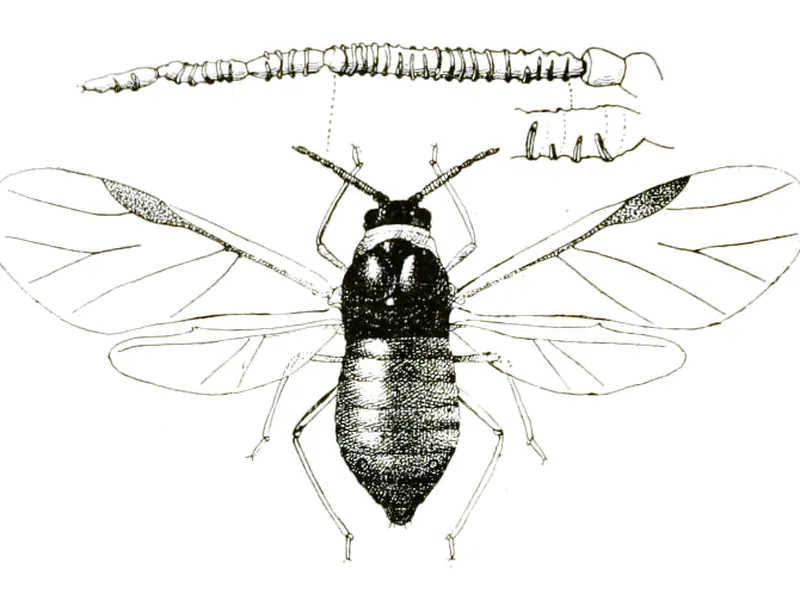
Woolly aphid, Eriosoma lanigerum, covers patches of trunk and branches in fluffy white wax, and its feeding causes soft, lumpy growths in the bark. RHS: Woolly aphid
Earwigs on fruit trees can cut aphid numbers. A flower pot loosely stuffed with hay, hung in the tree, gives them a home. RHS: Woolly aphid
Brown rot
Brown rot spreads out from wounds in the fruit, especially ones made by birds, codling moth and scab. It often shows as buff-coloured pustules in rings. RHS: Brown rot
Shrivelled “mummified” fruits left on the tree carry brown rot, so prune them out and bin or burn them. RHS: Pruning apples made easy
Bitter pit
Bitter pit, dark spots on apples late in the season or in store, is linked to a lack of calcium in the fruit, often after dry soil. RHS: Bitter pit in apples
One year on, one year off
Some apples, such as ‘Bramley’s Seedling’ and ‘Blenheim Orange’, tend to crop heavily one year and hardly at all the next. This is called biennial bearing. RHS: Biennial bearing
Not problems at all
In early summer trees shed some young fruit by themselves. This is the “June drop”, and it’s normal. RHS: How to grow apples
Grey-green crusty growths on the branches are lichen, which does the tree no harm. RHS: Pruning apples made easy
Next: apple history →