A short history of the apple
From wild trees in Central Asia, along the Silk Road, to a tree in Lincolnshire that went to space. Sort of.
Where apples come from
Apples belong to the rose family, Rosaceae. The garden apple is Malus domestica. Britannica: Apple An apple is a pome: a fleshy fruit where the ripened ovary and the tissue around it both become fleshy and good to eat. Britannica: Apple
The apple we grow was domesticated from a wild apple, Malus sieversii, in the Tien Shan mountains of Central Asia, some 4,000 to 10,000 years ago. Britannica: Apple
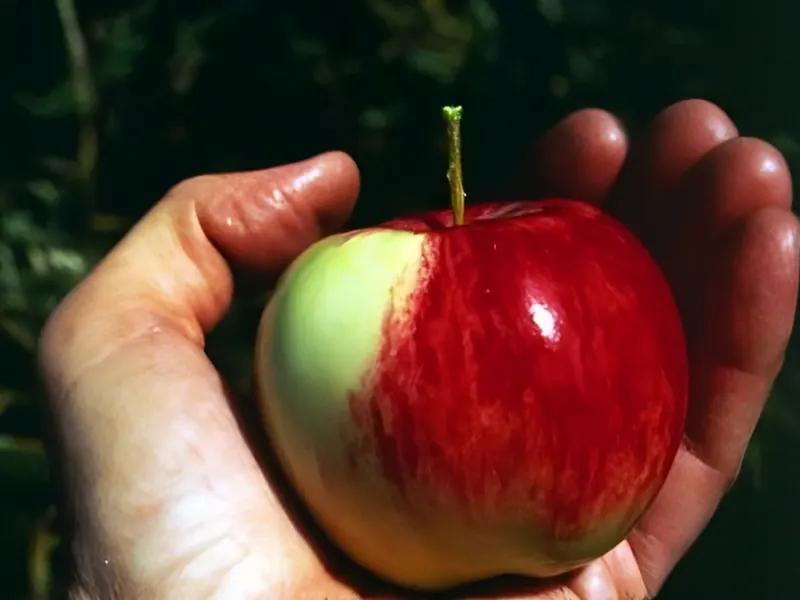
From Central Asia the apple travelled west along the Silk Road, crossing with wild crab apples on the way. The European crab, Malus sylvestris, added the most. Britannica: Apple
Distinct apple varieties were recognised more than 2,000 years ago. Britannica: Apple
Johnny Appleseed
Johnny Appleseed was a real man, John Chapman, a nurseryman who planted apple trees across Ohio and Indiana. Britannica: Apple
Newton’s apple tree
The apple tree at Woolsthorpe Manor in Lincolnshire, Isaac Newton’s birthplace, first put down roots around 400 years ago. It’s a ‘Flower of Kent’, a cooking apple. National Trust: Things to do at Woolsthorpe Manor ‘Flower of Kent’ has been known since at least 1629. National Fruit Collection: Flower of Kent
The National Trust calls the falling-apple story a scientific legend, but one believed to be broadly true. National Trust: Woolsthorpe Manor’s history
In 2015 pips from Newton’s tree went to the International Space Station with British astronaut Tim Peake, and came back to Earth in 2016 to be grown into young trees. National Trust: Things to do at Woolsthorpe Manor
Apple Day
Apple Day, 21 October, was started in 1990 by the charity Common Ground, to celebrate the huge variety of apples and the orchards we could lose. Common Ground: Apple Day
The first Apple Day filled 40 stalls in the old Apple Market at Covent Garden in London. Common Ground: Apple Day Apple Day events grew from more than 60 in 1991 to over 600 in 1999. Common Ground: Apple Day
The National Fruit Collection
The UK’s National Fruit Collection, at Brogdale Farm near Faversham in Kent, is one of the largest fruit collections in the world, with around 3,500 named cultivars of apple, pear, plum, cherry, vine and cob nut. National Fruit Collection · checked 31 Oct 2026
Apples today
In the first quarter of the 21st century, the biggest apple growers in the world were China, the United States and Turkey. Britannica: Apple · checked 31 Oct 2026
Most apples are roundish and 5–10cm (2–4in) across when picked: red, green or yellow, depending on the variety. Britannica: Apple
Next: myths vs facts →